Tuesday, June 16, 2009

Childhood delights

Yeah, it would have been the most desired treat in my childhood. As they say simple things make everyone happy and such childhood delights have the power to make most kids happy. Sometimes on the way back from school, I would buy a packet or two . They were usually heavily stocked in penny candy stalls near schools and sometimes in the school canteens/tuckshops. They were some of my favorite treats at school and were the cheapest treats then. I am glad that such childhood delights are still around for the younger ones to savour. Such childhood delights of old are still new.


Spicy biscuit/Biskut rempah

<Icing biscuit/Roti Hua/Flower biscuit

Thursday, June 11, 2009

Westerner vs Asian

I received the following in my email and would like to share it with fellow surfers/bloggers. How much of a Westerner or Asian are you? Or are you a mixture of both?

Westerner (Blue) vs Asian (Red)

(1) Opinion

Westerners: Talk to the point
Asians: Talk around the circle, especially if opinions are different


(2) Way of Life


Westerners: individualism, think of himself or herself.
Asians: enjoy gathering with family and friends, solving their problems, and know each other's business.

(3) Punctuality

Westerners: on time.
Asians: in time.

(4) Contacts

Westerners: Contact to related person only.
Asians: Contact everyone everywhere, business very successful.

(5) Anger

Westerners: Show that I am angry.
Asians: I am angry, but still smiling... (Beware!)

(6) Queue when Waiting

Westerners: Queuing in an orderly manner.
Asians: Queuing?! What's that?

(7) Sundays on the Road

Westerners: Enjoy weekend relaxing peacefully.
Asians: Enjoy weekend in crowded places, like going to the mall.

(8) Party

Westerners: Only gather with their own group.
Asians: All focus on the one activity that is hosted by the CEO.

(9) In the restaurant

Westerners: Talk softly and gently in the restaurant.
Asians: Talk and laugh loudly like they own the restaurant.

(10) Travelling


Westerners: Love sightseeing and enjoy the scenery.
Asians: Taking picture is the most important; scenery is just for the background.

(11) Handling of Problems


Westerners: Take any steps to solve the problems.
Asians: Try to avoid conflicts, and if can, don't leave any trail.

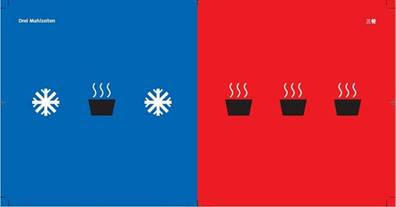
(12) Three meals a day

Westerners: Good meal for once a day is sufficed.
Asians: At least 3 good meals a day.

(13) Transportation

Westerners: Before drove cars, now cycling for environmental protection.
Asians: Before no money and rode a bike, now got money and drive a car

(14) Elderly in day-to-day life


Westerners: When old, there is snoopy for companionship.
Asians: When old, guarantee will not be lonely, as long as willing to babysit grandkids.

(15) Moods and Weather

Westerners: The logic is: rain is pain.
Asians: More rain, more prosperity

(16) The Boss

Westerners: The boss is part of the team.
Asians: The boss is a fierce god.

(17) What's Trendy

Westerners: Eat healthy Asian cuisine.
Asians: Eat expensive Western cuisine.

(18) The Child


Westerners: The kid is going to be independent and make his/her own living.
Asians:
Slog whole life for the kids, the centre of your life.

Tuesday, June 9, 2009

Belian - Borneo Ironwood

In Borneo and Sarawak, Belian or Borneo ironwood is liken to what teak is to other subtropical countries in Southeast Asia.

There are actually two species of belian in Sarawak - Eusideroxylon zwageri and E. melagangai (the later has also been elevated to a genus status -Potoxylon melagangai). The two species or rather two genera (Eusideroxylon and Potoxylon) differ from each other by the shape of the fruits and twigs and the density of the wood. P. melagangai has an angular twigs and lighter wood which is also less durable. E. zwageri is found throughout Sarawak and used to be locally frequent and abundant in areas between Serian and Sri Aman as well as pockets of the Rejang and Suai while P. melagangai is common in northern Sarawak such as Mulu area. In Sarawak, locals recognised at least three varieties of belian while in West Kalimantan, at least four varieties have been documented.

The growth of belian is extremely slow and will take up to 120 years to reach 30cm diameter. So is the decay of belian wood which is equally slow and therefore very much sought afterfor construction and outdoor use. Stumps of logged belian trees are still around decades after they were felled. You can find such stumps at Matang near Kuching or Sepilok in Sandakan, Sabah. Using carbon dating method on wood samples taken from such stumps of logged trees at Matang, Sarawak, Japanese researchers estimated the age of the belian trees to be well over 1000 years old. Indeed, belian trees are the oldest member in any rain forests in Sarawak.


Young Sapling of belian

Belian are used for a variety of purposes in Sarawak. The wood is reputed to last for a few hundred years and has been used for construction of bridges to being used as survey pegs to electric poles.

During the early days of Rajah Brookes' reign, forts played an important role in the security of towns in Sarawak and with the exception of Fort Magherita in Kuching, the rest of the forts were constructed with belian timber. Fort Brooke in Sibu was built of belian although it does not exist any longer and provided much needed security for trade and other commercial activities at that time. In the past, almost the entire Sibu town was built of belian including the rows of shophouses along Channel Road until they were destroyed by fire in 1928.

I have been to an Iban longhouse in Betong as well as traditional Melanau houses in Matu where the main pillars of the longhouse/houses are derived from a huge single belian tree trunk each. When I was young, I stayed in the old part of Sibu whereby houses were built on stilts on the bank of the mighty Rejang River. The house was built entirely of belian. The houses were linked to one another by belian plank catwalk. I remember two things about staying in such belian house: One, occasionally one can get very small belian splinters accidentally lodged onto the sole of one's foot if one is not careful such as while walking on the belian floor (especially when the floor is not varnished). Hokkien refers to such very small splinters as "chuah". Two, the belian plank catwalk can be extremely hot on a very sunny day, especially around noon time and one (especially children) can get blisters on the sole if one walked bare footed on them for a long time. My mother used to warm water in pails by leaving them on the catwalk.


Belian Electric Pole

Buildings have also incorporated belian shingles roofing into its architecture such as the world famous Sarawak Museum and the Khatulistiwa Restaurant at the Kuching waterfront. In the old days, small holes were punched in each shingle which were then used to tie one shingle to the next with rattan strings. Nowadays, nails are used in place of rattan strings.


The Khatulistiwa Restaurant styled after a traditional Bidayuh "baruk" and with belian shingles roofing.


One of the wings of the world famous old Sarawak Museum.


Friday, May 8, 2009

QYPE : A Review

What do you do when you are going to visit a foreign city or are already in one and would like to find more information about the places you want to visit? A normal thing to do would be to use one of the more popular search engines like Google


or popular guide books such as lonely planet.


However, there is an online site that takes you a step further when you are in a foreign city and would like to see, feel and enjoy like what a local would.

Qype is a one-stop infomation centre for leisure, entertainment and tourist guide. The site gives information about Restaurants, Bars, Hotels, Events and more....

Whether it be Shopping, Eating / Drinking, Arts or anything else that you are interested in. This site will show you where to find the best places and deals.


Any internet surfer from anywhere around the world can browse the site but the fun way will be to sign up as member and participate by sharing the knowledge and providing comments or participate in the forum or even creating guides on a particular place frequented within any particular city. There are different categories of members (Qype newbies - no star; Qype insider – blue star and Qype ninja – red star) depending on how active one is.

Qype is easy to navigate, user friendly and clearly understandable.

Besides English, the website offers information in five other languages i.e. German, French, Spanish, Brazilian and Polish for worldwide users.


You can search information by clicking based on the different categories eg Eating & Drinking or Shopping. You can also access information by using the search engine provided at the top and bottom of the homepage. Eg. pubs london or restaurants london


Whilst information for cities worldwide are found, more information can be obtained from major European cities such as London, Paris Berlin, Madrid than those outside of Europe such as North America or Asia but the information is growing. For the four largest cities in Europe, you can search for information based on the administrative areas: London (32 boroughs plus City of London), Paris (20 arrondissements), Berlin (23 bezirke) or Madrid (21 districts).


Location map is provided as well as useful transport information on how to get to the place.


Another good feature about the site is it gives information about what is nearby the place you are looking for:


The site has a very appropriate tagline: "Find it, share it".

Thursday, April 23, 2009

Every which way - Migration in Asia

The immovable peasantry, bound by tradition, loyalty or inertia to the timeless village, is one of the abiding myths about Asia. In fact the history of Asia is a history of movement. From the very beginning, Asians have been moving into, out of, and around the region, whether as economic migrants, political refugees, or cultural proselytisers.

Asians, like the rest of humanity, are probably descended from the first human who evolved in Africa. But even if there was parallel evolution of Homo sapiens within Asia itself, they would have, over the eras, migrated many thousands of miles.

Linguistic, archaeological and genetic evidence all points to a wide dispersal of Asians. Austronesian languages and seafaring culture prevail from Madagascar, off the coast of Africa, to Hawaii and Tahiti in the Pacific; prehistorians suggest that many of these voyages of migration occurred within the last five thousand years, from origins in Southern China, the Philippines or eastern Indonesia.

Similarly, the linguistic links between Japanese and the Altaic languages of western and central Asia also imply early migration while “Aryans” apparently invaded India from the north and the Tai peoples moved into Thailand, Laos, Burma, and Vietnam from southwestern China. Although these movements date from “prehistory” (before the time of written records), many great Asian migrations are historical.

Perhaps the greatest achievement of Chinese civilization is the creation of "China” itself; today well over one billion people occupy a vast area and consider themselves Chinese. In fact, the original “Chinese” (often called “Han”) inhabited only a fraction of the area now claimed by the People’s Republic of China, and many, perhaps most, “Chinese” today are descended, at least in part, from other stock.

“China” grew both through migration and sinification. Within the last 2500 years, million of Han moved south from their original heartland in the Yellow River valley, beyond the Yangtze River and as far as Yunnan and Tibet (annexed to China relatively recently). As they moved, they conquered local populations and by intermarriage and the imposition of Chinese culture, turned the descendants of these people into “:Chinese’ themselves. They became not “cultural minorties”, but actual Han: Cantonese, Hokkien, Hakka and many others.

Only the Vietnamese, ruled by China for 1000 years retained their own identity. After they became independent, they began their own great southward drive of migration ands assimilation. As recently as 500 years ago there were almost no Vietnamese in the Mekong delta area; the southern half of the country is essentially populated by the descendants of immigrants or Vietnamised minorities. History also records significant modern migrations in the Malay world, particularly from the Menangkabau Highlands of Sumatra into the Malay Peninsula.

By the 19th century, driven by colonialism and capitalism, the human flow was in full spate. Fleeing economic hardship and social unrest in south China, millions of peasants sailed as “coolie” labourers – virtual slaves – not only to all the countries of Southeast Asia, but beyond, to Africa and the Americas. They built railroads in the United States and worked the guano mines of Peru. From India, migrants fanned out to become moneylenders in Burma, labourers in Malaya and Fiji, and bureaucrats and professionals throughout the British Empire.

Less visible in the historical records was the even larger movement of Asians within political units: from Java to Sumatra and the outer islands of Indonesia; from Ilocos to the Cayagan Valley in the Philippines; from the Chao Phraya plain into Isan in Thailand; from upper Burma to lower Burma, from Szechwan to Yunnan. The more we look, the more we find, down to “micro-migrations” from one village to the next.

Over the past 50 years this local movement has accelerated, especially towards cities such as Hong Kong, Bangkok, Jakarta and Manila, most of whose inhabitants are just one or two generations removed from their rural origins.

But even international migration, slowed temporarily by post-war nationalism, has picked up again. There are more than a million Filipinos working in west Asia, Hong Kong and Japan; ten thousands of Chinese students overseas; Japanese managers and tourists throughout Southeast Asia, Thai farm workers in Israel, Cambodia refugees selling doughnuts in California and Borneo's Dayak oil rig workers in the North Sea.

Today, more than ever, to understand Asia you have to understand people in motion.

Friday, April 17, 2009

Two Contrasting Worlds

Indonesian music scene is very colourful. These are two of the popular Indonesian songs of the 1980's when I was still in school: Madu dan Racun (Honey and Poison) and Singkong dan Keju (Cassava and Cheese). Both songs are about two contrasting worlds: one about the good intention (honey) and bad intention (poison), the other about the east (cassava) and the west (cheese).


Arie Wibowo - Madu Dan Racun (Honey and Poison)

Engkau yang cantik
Engkau yang manis
Engkau yang manja
Selalu tersipu, rawan sikapmu
Di balik kemelutmu

Di remang kabutmu
Di tabir mega-megamu
Kumelihat dua tangan
Dibalik punggungmu

Reff:
Madu di tangan kananmu
Racun di tangan kirimu
Aku tak tahu
Mana yang akan kau berikan padaku
Aku tak tahu
Mana yang akan kau berikan padaku


Arie Wibowo - Singkong Dan Keju (Cassaava and Cheese)

Kau bilang cinta padaku
Kalau ku bilang pikir dulu
Selera kita
Terlalu jauh berbeda

Parfum mu dari paris
Sepatu mu dari italy
Kau bilang demi gengsi
Semua serba luar negeri

Manakah mungkin mengikuti caramu
Yang penuh hura-hura

Reff:
Aku suka jaipong kau suka disko
Oh oh oh oh

Aku suka singkong kau suka keju
Oh oh oh oh

Aku dambakan seorang gadis yang sederhana
Aku ini hanya anak singkong
Aku hanya anak singkong

Wednesday, April 15, 2009

Beautifully Imperfect

Yasmin Ahmad. Does that ring a bell?

Perhaps you have seen her commercials for PETRONAS on television on different festive occasions such as Chinese New Year, Hari raya, etc like this:


Yasmin films such as Rabun (My Failing Eyesight) (2003), Sepet (Chinese Eye) (2004)
and Gubra (Anxiety) (2006) have been screened at major international film festivals and have won her praises and numerous international prizes.

In Yasmin's films and commercials, negative events or sensitive issues can be turned into positive lessons.


Recently, Yasmin Ahmad has done commercials for Singapore's Ministry of Community Development, Youth and Sports with a "Think family" theme.

The advertisement, which debuted on television in Singapore this April, is set at a funeral, depicts an interracial marriage and talks about bodily functions. And the eulogy at the funeral is both funny and touching.


Here's another of Yasmin's commercials for the Ministry of Community Development, Youth and Sports, Spore: